Sunday, July 31, 2016

Review: Fell, Feral City

Fell, Feral City Fell, Feral City by Warren Ellis
My rating: 3 of 5 stars

Warren Ellis’s Transmetropolitan is the second best collection of periodical comics I’ve ever read. (Eric Powell’s The Goon is better, but that’s it.) So when I found out that Ellis had a series that takes on the hardboiled detective genre, I had to check it out.

There are some definite virtues here. Ben Templesmith’s illustrations have a nice, washed out look to them, and they manage to move the story forward on their own. His fight scenes are blunt and muddied, but they’re surprising effective even without words.

Ellis hasn’t lost his ability to tell a tight, clever story either. Each issue is a self-contained narrative, almost like a classic cop procedural. The approach is fresh in every case, and there are legitimate surprises in the twists he introduces.

And the writing is often strong in its feel for language and dialogue. The first frame, when Police Detective Richard Fell has just signed a lease on a new apartment in the rundown Snowtown area, has this great exchange with his elderly new landlady. “Can I move my stuff in tonight?” “Gimme the money. You can do what you like with it. If you’re going to shoot porno, don’t clog the drains.”

So the details and feel are terrific. The rest, not so much.

Fell himself makes a great detective, but not as great a character. He’s committed to helping the helpless, to looking after the citizens of his adopted city, but, after the eight issues collected here at least, there’s no explanation why. There’s some teasing about why he’s been exiled to this backwater, but it stays as backstory. Bottom line, he’s mostly just a white knight here.

On top of that, the episodic nature of the individual issues gets old. As clever as each separate story is, it starts fresh. There’s little building from one story to the next, and I miss that. It’s definitely worth reading the first couple of these, but the payoff diminishes as you go.

I’m not giving up on Ellis, not at all, but I don’t think this is ultimately his best work.


View all my reviews

Wednesday, July 27, 2016

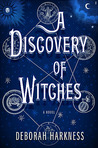
Review: A Discovery of Witches

A Discovery of Witches A Discovery of Witches by Deborah Harkness
My rating: 1 of 5 stars

I understand that different genres have different rules. I get it that the noir I enjoy will spend a lot of time establishing context because context reveals character. And I get that fantasy will spend time “world-building” (a term I don’t much like since I see it as shorthand for ‘avoiding the development of character,’ but that’s a rant for another day). So I suppose romance novels have their thing, too. Getting to see the tension between two different people builds up the stakes of their eventually coming together. It makes sense.

But this book? Really?

Diana Bishop more or less accidentally recovers a book seething with magical power. She knows it from the moment she sees it, and she recognizes that its power has drawn a host of supernatural creatures all at once: her own fellow witches, a crew of demons, and a devastatingly handsome vampire. She’s done something that’s clearly overturned the order of things, and, by the conventions of every genre I know, I expect to see the repercussions of that…

Instead, we get her going to yoga with her new vampire/possible boyfriend. (Yes, yoga, where the witches, demons, and vampires all hang out doing downward-facing-dog at the same time as at least some of them are scheming after this powerful book.) And we get her discussing interior decorating of the vampire’s “new” 500-year-old home. And we get her assuring her friends that she’s not falling in love with this charismatic creature.

I confess, I made it only about a quarter of the way through this one. I wouldn’t ordinarily review something I’d read so little of, but I needed closure of some sort, and it was either write this or read the rest, and I just can’t see doing that.

The writing her is stunningly clunky. Most of it’s narrated in the first-person, and it comes littered with what we “in the business” sometimes call ‘information dump.’ That is, we get long digressions that fill us in on what happened earlier. A skillful writer – and I know there must be skillful paranormal romance writers – knows how to break up backstory, how to reveal it slowly as part of the ongoing narrative. This feels like cut and paste.

And then, every so often, we get a clumsy third-person chapter that brings us up to speed on how the vampire sees things differently. He’s drawn to her, of course, but he’s confused in his feelings. Does he love her for her mind? For her link to the powerful book? Or because he wants to eat her?

My wife’s family has a saying “Don’t yuck someone else’s yum.” That is, don’t disparage something others enjoy when you know you can’t enjoy it yourself. But here, with all that simply isn’t working, I can’t help myself. How this is a major release – which should total almost 1500 pages when the whole trilogy comes out – is beyond me.


View all my reviews

Tuesday, July 26, 2016

Review: Dope

Dope Dope by Sara Gran
My rating: 4 of 5 stars

There’s a lot to admire in this one. Gran sets out to interrogate the tough-guy aura of 1950s crime stories by presenting us with a female protagonist, Josepine Flannigan. And she isn’t simply a “private dick” in a dress. She is genuinely a woman, a woman who’s suffered as a neglected daughter, a put-upon prostitute, and a hard-luck junkie. She sees the world differently than the stereotype because her situation begins from an entirely different point: she isn’t someone suffering existential angst, someone who “coulda been a contender” but for some luck. She’s someone who has always felt the obligation to care for others, someone who has always carried the separate female burden of being the caregiver of last resort for the defenseless in her family.

Beyond that, Gran writes well. Check out this gem, “Two girls were sitting at the mirror, laughing and putting on makeup. They were in their late twenties, with figures that looked younger and eyes that looked older.” Or, later, when Josephine meditates on what would drive someone to spend her or his life doing heroin, she weighs the challenge of making a new life, a new identity, as maybe the greatest challenge to getting clean. “That’s why you start, and that’s why you stick with it, so you can finally be someone: a junkie.”

And then there is the genuinely solid narrative story here. Someone wants Josephine to track down a discarded college girl, a kid forgotten by everyone except maybe her own parents. She’s being manipulated from the start, and she plausibly believes what she hears until, gradually, she unpeels the layers. There are twists here, and they’re satisfying.

If I have a complaint, it’s that Gran doesn’t seem fully to inhabit the 1950s moment. Making this a historical novel gives it license for a thoughtful revisionism, but – outside of what’s advertised as a William S. Burroughs’s sensibility to the junkie lifestyle of the era – we don’t get much acknowledgement of how the era was different. Details likes a Rocket 88 or the new release of a Billie Holiday single don’t quite give us the grit of, say, a James Ellroy novel. There’s a slight sense of the architecture of the city as midway between its 1910s tenement past and its eventual 1980s/1990s reconstruction, but Gran doesn’t take time to explore that, and much of what happens feels as if it could be taking place in a generic moment.

[SPOILER ALERT] What elevates this for me from flat genre work, though, is its final and unanticipated twist. I was at first troubled by the sense that it’s Shelley, Josephine’s sister, who’s behind all the machinations and murders. It felt at first like a too-convenient twist, the final reveal in an author’s game with the reader.

As I think about it, though, it feels all the more appropriate, all the more a well-founded maneuver in a novel that really is trying to be about something substantial. Shelley has set everything in motion because her past has come back to haunt her; she has a chance to be a T.V. star, but that’s at risk because a sleazy old friend has naked pictures of her. And, to get them back, she acts on her long-simmering hatred of Josephine, one sister taking it all out on another.

And, as I look back, that hatred is there throughout, just thoughtfully marginalized. Part of Shelley’s hatred for Josephine comes from Josephine’s having been a junkie, from her having been someone almost programmed to let others down.

But I think a greater part of it comes from the fact that it was Josephine who took care of Shelley when no one else would. Shelley was her ‘first kid,’ the dependent for whom she sacrificed herself. Josephine might have made something of herself if not for looking after Shelley – something Detective Springer among others tells us. It’s easy to imagine the deep self-loathing that would give Shelley. Here she is, a beauty and a T.V. star, and Josephine is her portrait of Dorian Gray. Josephine has had nothing but trouble in her life, and that’s a perpetual rebuke to Shelley.

There’s something deeply hardboiled and satisfying in the way Shelley lets that darken her beyond humanity. She becomes capable of murder (and the murder of at least two innocents in Jim and Nadine) in her desire to erase her past, a past which includes Josephine most of all.

So, to wrap up this line of thought, if Josephine is one variety of a female protagonist here, a woman whose suffering we see as the price of her being cast in the role of mother-figure too young, then Shelley is the other side of that. She’s a woman resentful of having been ‘sheltered’ by others, a woman resentful of the fact that, unlike a man, she’s asked to pay the price for her indiscretions, indiscretions that were always and only about surviving. She’s been asked to endure too much in her rise, and she’s going to rewrite the history of her childhood and its deprivations.

In giving us Josephine, Gran makes a striking bid to recover a lost feminine history of her period. In giving us Shelley, she creates a force equally bent on erasing it all over again.


View all my reviews

Sunday, July 24, 2016

Review: Already Dead

Already Dead Already Dead by Charlie Huston
My rating: 3 of 5 stars

It’s a lot harder to do this than it looks. I know, all too well, because I’ve been working on something in the same vein. (And “vein” isn’t a pun, though it could be.)

Huston’s basic plan here is to marry the hardboiled novel to the vampire story. His hero, Joe Pitt, is a vampire who, true to the Chandler/Hammett code, insists on working alone in a quasi-existential bid to figure out what it all means. In other words, his case(s) turn out to be as much about self-discovery as about their more proximate causes.

And it works. It works pretty well.

Being a vampire (vampyre) means that Pitt is changed from what he was when he was human. He isn’t sure what fulfillment might look like. He balances his girlfriend – who, as someone HIV-positive, refuses to sleep with him – with his uncertain place in the pecking order of the New York vampire world. He takes cases no one else can manage because, precarious and alone as he may be, no one else in this world is as self-possessed, as legitimately his own person.

The story itself is solid. Pitt comes up against the agendas of several different people, and it isn’t clear until the end who’s responsible for what. It’s professional work, entertaining and engaging, and, as I say, I’ve tried my hand at something similar.

Things fall down a little when too much of the story turns on the particulars of what it means to be a vampire, things like how the virus affects its host and how driven particular vampires are to the different clans and gangs, to the politics of the vampyre world. But, from what I can tell, Huston builds on all of that as part of the ongoing series. He’s planting the seeds of a more complex world where each decision here has implications for future novels. So, if it feels a touch too pat here, I can forgive it.

I also can’t help contrasting this with Jim Butcher’s Harry Dresden books. Where those are clunky and cliché-ridden, with a protagonist in love with his idiosyncrasies, this is someone who approaches a real character – at least as real as a vampire private detective can get.

In the end (or in the beginning if you prefer) it’s a stretch to make this work, but Huston does. I’m not quite in a hurry to read what’s next, but it’s on the list. This is quality pulp fiction, and I’m taking notes on how Huston pulls it off.


View all my reviews

Wednesday, July 20, 2016

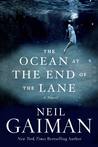
Review: The Ocean at the End of the Lane

The Ocean at the End of the Lane The Ocean at the End of the Lane by Neil Gaiman
My rating: 4 of 5 stars

I didn’t especially enjoy Neil Gaiman’s Neverwhere, and that, to my somewhat surprise, is the only Gaiman I have read so far. I’m not sure where to start with The Sandman stuff, and none of the other novels have struck me as particularly compelling. (But I am open to suggestions…) I’m just not that interested in fiction that seems poised to rewrite metaphysics. If Neverwhere was full of secret doors and an entire separate plane of existence, it suggested too large a canvas, one unsatisfactorily filled.

As it turns out, though, The Ocean at the End of the Lane isn’t a grand urban fantasy, nor is it an Allan-Moore style fantasy-politico invention. Instead, this is a smaller, more personal and more haunted story.

And it’s what I was hoping I’d find in Gaiman even if I didn’t know it until now.

The more I read this, the more it brought to mind the fabulous A Wrinkle in Time, down even to the presence of three mysterious women (one a girl here) who represent a glimpse of powers that we humans can never quite realize. But, as important as those characters are, the real story turns on a child who is only slowly learning that the universe is larger than himself. It’s a slow, difficult and sometimes terrifying business to learn that the adults who protect us are really just grown-up children themselves. That story may be as old as our species, but we have to find ways to tell it in every generation.

Gaiman manages very cleverly (and often movingly) to give a sense of the wonders of childhood – the joy of having a kitten or the freedom of running through a field – so the threats that emerge have something real at stake. I also enjoy the framing device of his returning to the scene of these events as an adult – an adult who cannot entirely remember what it felt like to be a child in these circumstances – since it punctuates the story as a whole.

There are moments here where a nostalgia creeps in, where (as he discusses in his afterword) Gaiman seems too much drawn to the lost world of his own childhood, and that feels like a flaw to me. Others may complain about the many unexplained elements of the magic, but that doesn’t bother me; the whole point of magic is for things to be left unexplained. But we do get hints at it, promises that some things will be revealed, and then those things aren’t. I like mystery, but I have less patience for teasing.

In any case, I did enjoy this. It feels like a small work, but that may be its biggest virtue: a clean shot at recovering a lost and focused innocence.


View all my reviews

Tuesday, July 19, 2016

Review: The Chill

The Chill The Chill by Jason Starr
My rating: 4 of 5 stars

To be honest, I haven’t read all that many “graphic novels.” That’s not for lack of trying. I read trade paperback collections of monthly or quarterly series all the time – like Eric Powells’s The Goon or Dave Sim’s Cerebus. And I enjoy any of them, or I wouldn’t keep reading them.

But actual “novels” in graphic form? Stories that sustain themselves over the course of a book and then end? Not so many. There are the legit literary ones – Will Eisner, Art Spiegelman, and Gene Luen Yang – but this is genre, a noir story boiled down to pictures and just a handful of words.

And this really works. It ties bloodied up Celtic myths with a police procedural and a generational love story. It reveals its background mystery quickly where others might make a gimmick out of it, but it keeps up its energy as the climax ramps up.

As much as any graphic novel I can think of, this feels like reading a movie. The illustrations are clean and sharp, and they carry the story in important ways. As just one example, a character has the capacity to appear differently to different people. The illustrations show that before we get the explanation, but not too much before.

I’ve heard good things about Starr, and I read an earlier book that he wrote with Ken Bruen. On the evidence of these two, he’s someone to keep reading. He gets what the genre is about, and he delivers it without nonsense.

Definitely worth checking out.


View all my reviews

Monday, July 18, 2016

Review: Rilke on Black

Rilke on Black Rilke on Black by Ken Bruen
My rating: 3 of 5 stars

I’ve had a serious jones for Bruen’s work over the last few months. When he’s on, he just gets the hardboiled. He has his own voice and his own powerful sense of humor, and he has a knack for writing stories that favor the jab over the haymaker: quick narratives that take off and wrap up in skilled fashion.

This one, despite sounding great, is my least favorite of his so far. For one thing, I find the voice here more challenging that in other places. Nick talks in a strange fashion, some of it British-street vernacular (which can make it tough) and some of it just idiosyncratic in its rhythms. I expect him to go on about one thing, and he instead chooses another. It isn’t a matter of vocabulary, but of direction; I had too many instances of expecting he’d talk about one thing and finding, instead, that I was supposed to pick it up by innuendo or implication.

For another, Nick is very self-satisfied. He may have ambitions to be more than a tough bouncer, but he likes being a big plug-ugly. He likes the feeling of intimidating most people he sees. There’s nothing wrong with that, but it’s not a perspective I can readily adopt. Unlike the extraordinary Jack Taylor in The Guards, who manages not quite to hate himself as he wrestles with his many failures, Nick risks patting himself on the back at every turn.

That tension undermines the strong premise of the book: Nick, his new young lover, and his sociopathic neighbor kidnap a local businessman. That might go in a lot of directions – and it does bring some solid payoffs, especially in the way the businessman teases the not-too-bright Nick – but it leads to Nick taking more and more responsibility for the crime as we see him less and less able. (I mean, forgetting to wear the mask that’s in his pocket?) In other words, Nick trusts (and even likes) himself despite increasing evidence that he shouldn’t.

The good news is that, like the other Bruen I’ve read, this is all over in a rush of adrenaline. This isn’t disappointing enough to put me off Bruen, but it’s certainly at the bottom of my list of his.


View all my reviews